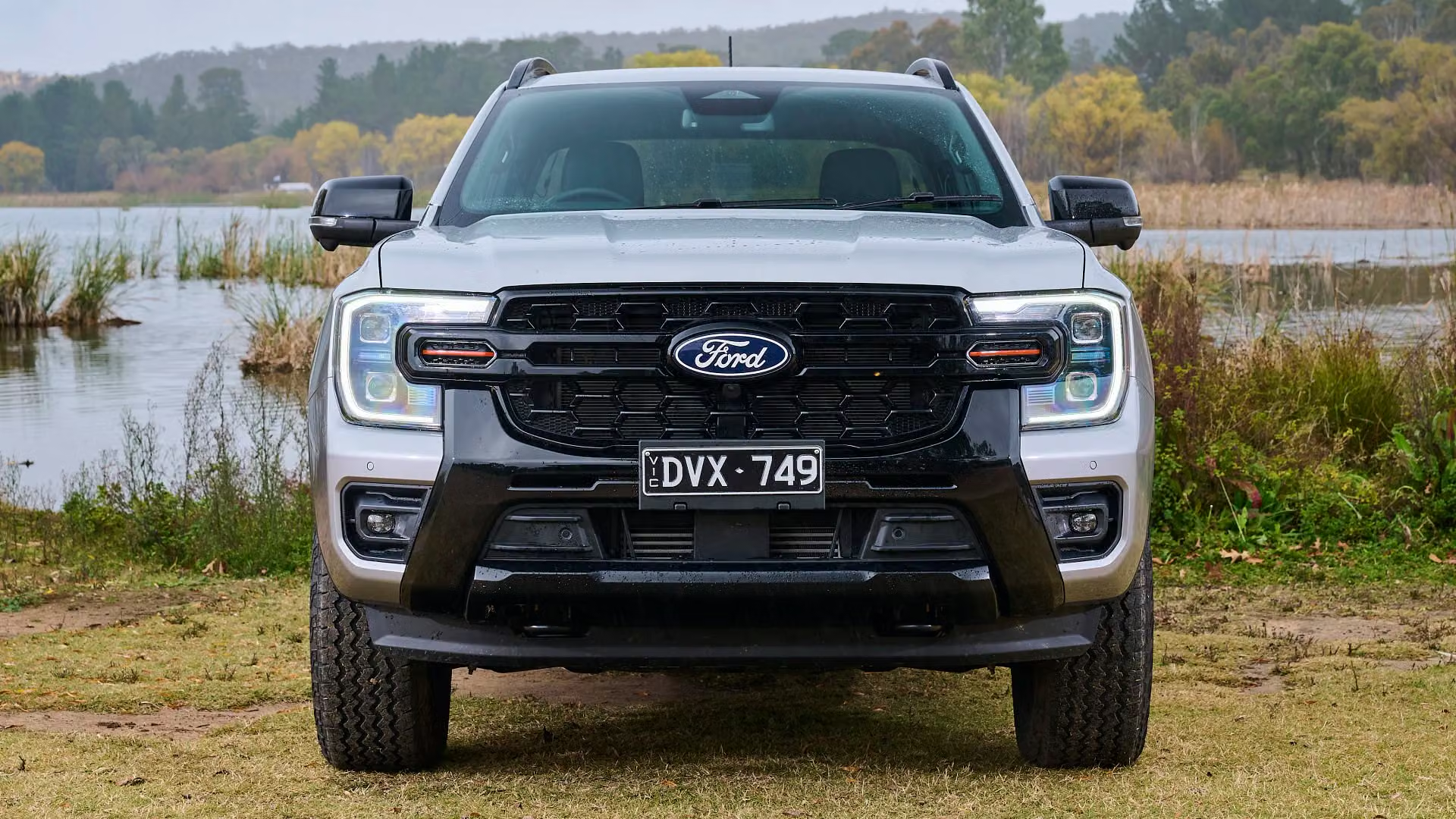
Ford has confirmed that development work on the next-generation Ford Ranger has already started in Australia. The new pickup is still several years away, but Ford’s Australian engineering team is already working on the successor to the current Ranger, with the new model expected around 2030.
Australia Continues to Play a Major Role
Australia has been central to the development of the Ford Ranger for several generations. Ford Australia has around 1,500 employees involved in its local operations, with a large engineering team responsible for product development.
Ford Australia president and CEO Fadi Mawal confirmed that engineers are already working on the next-generation Ranger and said the company wants Australia to continue leading development of the Ranger and Everest.
Ford’s Australian engineering operation is also described by the company as a key centre for development of its ladder-frame vehicles. The current Ranger and Everest were developed with major Australian engineering input and are sold across numerous global markets.
New Ford Ranger Expected Around 2030
The next-generation Ranger is not expected to arrive immediately. Reports indicate that the replacement could appear around 2030, meaning the current-generation model still has several years of production and updates ahead of it.
Ford is likely to continue improving the existing Ranger before introducing its completely new-generation successor.
Electrification Could Become a Major Focus
One of the biggest questions surrounding the next Ranger is its powertrain.
The current model has already expanded beyond traditional diesel power. Ford introduced the Ranger Plug-in Hybrid, combining a 2.3-litre turbocharged petrol engine with an electric motor while maintaining a claimed 3,500kg towing capacity.
This makes electrification an important part of the Ranger’s future. The next generation could offer a broader range of hybrid and plug-in hybrid technology.
However, Ford has not confirmed that the next Ranger will become fully electric. The company has highlighted challenges involving battery range, towing capability and the requirements of customers who use their pickups in demanding environments.
Toughness and Towing Capability Will Remain Important
The Ranger is used for everything from daily driving to towing, off-road travel and commercial work. As a result, Ford will need to balance new emissions technology with the capability expected from a midsize pickup.
The existing Ranger platform already supports multiple powertrain options, including diesel, plug-in hybrid and high-performance versions. This gives Ford a foundation for developing a more electrified next-generation vehicle without abandoning the pickup’s traditional capabilities.
Concerns Over Australian Engineering Costs
Although Australia remains heavily involved in Ranger development, the future of local engineering has also been the subject of discussions between Ford and the Australian government.
Ford CEO Jim Farley has previously raised concerns about the cost of engineering vehicles in Australia compared with lower-cost development locations in Asia. Ford has been discussing the issue with the Australian government while seeking to maintain its local engineering capabilities.
Despite these concerns, Ford’s latest comments indicate that Australian engineers are currently involved in the next Ranger program.
Current Ranger Still Has Plenty of Life
The current-generation Ranger received further updates for the 2026 model year, including changes to its engine range and equipment. Ford has also expanded the availability of its 3.0-litre V6 diesel while continuing to offer electrified technology in selected markets.
Therefore, the next-generation model is expected to be a major step rather than an immediate replacement.
What to Expect From the New Ranger
Ford has not yet revealed the design or detailed specifications of the next-generation Ranger. Therefore, details such as engine outputs, dimensions, interior design, pricing and exact technology remain unconfirmed.
The biggest expected areas of development include:
- New-generation chassis and suspension technology
- More advanced hybrid and electrified powertrains
- Improved fuel efficiency
- Advanced driver-assistance technology
- Updated infotainment and connectivity
- Continued strong towing capability
- Improved off-road performance
- A new exterior and interior design
Final Thoughts
The next-generation Ford Ranger is already being developed in Australia, confirming that Ford is looking well beyond the current model. With a potential launch around 2030, there is still considerable time before the new pickup reaches showrooms.
Electrification is expected to play a major role, but Ford has yet to confirm whether the next Ranger will be fully electric. For now, the company appears focused on combining newer powertrain technology with the towing, durability and off-road capability that Ranger buyers expect.
Australia’s engineering team is therefore set to remain an important part of the Ranger story as Ford prepares its next global-generation pickup.
About The Author