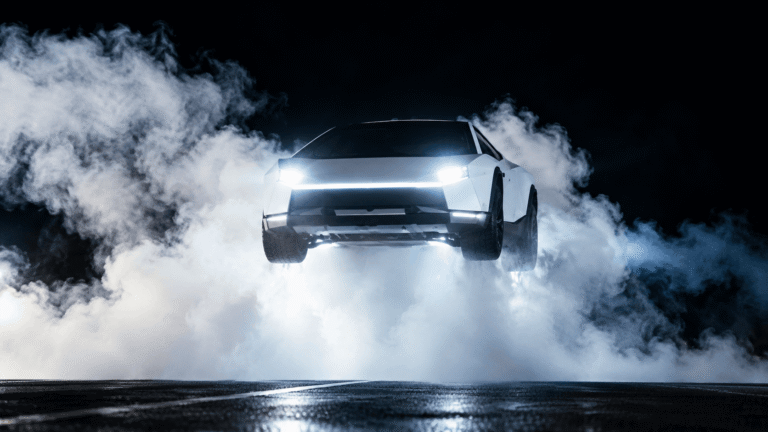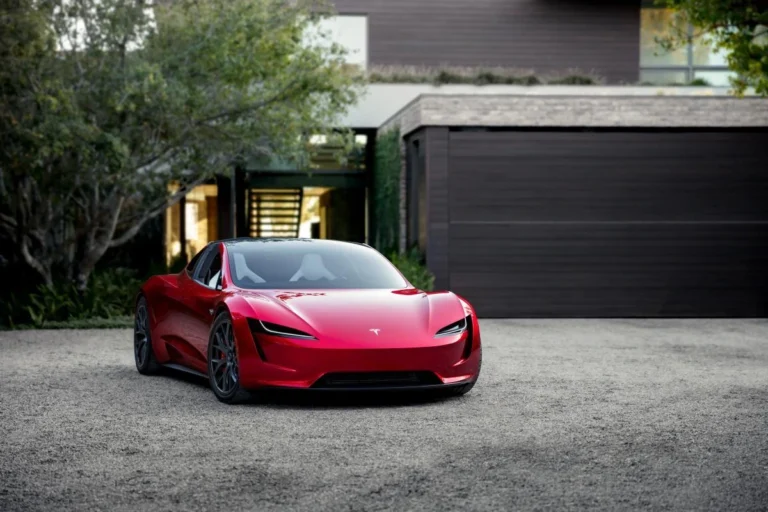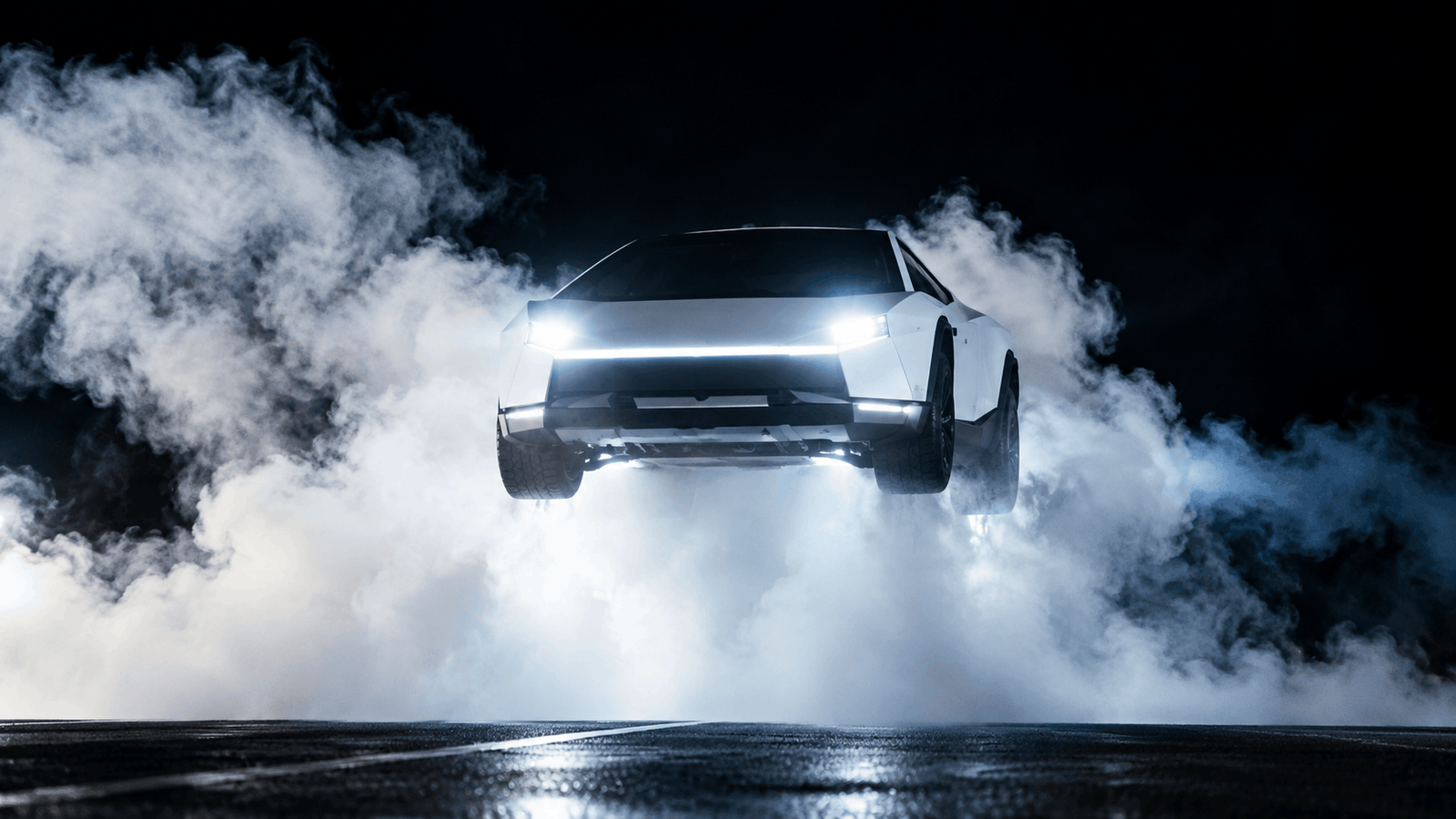
Picture a low, wide electric supercar leaving a starting line, then gaining a burst of acceleration that feels more like a launch than a drive. That image is behind the tesla roadster flying cars flying car buzz.
It began with Elon Musk’s comments that a SpaceX-developed option package could use rocket-style thrusters to push the next-generation Tesla Roadster far beyond normal sports-car limits. He has even joked about hovering. Still, a thruster-assisted car is not a certified aircraft, and Tesla has not announced a production flying vehicle. Here is what is known, what has been said, and what remains imagination.
What Is the Tesla Roadster Flying Car Concept?
Four different ideas often get blurred together:
- The next-generation Roadster: a Tesla electric supercar first unveiled in 2017.
- A rocket-assisted version: a proposed option using compressed-gas thrusters for extra acceleration, braking, and cornering.
- A hovering car: a vehicle that briefly lifts off the ground, which Musk has mentioned only in passing.
- A true flying car: an aircraft that can also drive, requiring FAA certification.
Only the first has an official existence. The rest are ideas or speculation. They resonate with American readers because they blend the country’s car culture, its space-industry pride, and the long-promised dream of personal flight. more tesla modles
tesla roadster flying cars Exterior Design and Futuristic Styling
What’s known: The 2017 unveiling showed a low-slung, two-door, four-seat electric supercar with a removable glass roof, smooth aerodynamic surfaces, and wide rear haunches. Tesla has said the production design may differ from that prototype tesla roadster flying cars.
What’s expected: Supercar buyers would look for sculpted panels, a sharp front fascia, slim LED lighting, and aerodynamic wheels. Lightweight materials such as carbon fiber would be natural for a performance flagship, though Tesla hasn’t confirmed a materials list.
What’s imagined: A flight-capable version might need retractable wings, ducted fans, thruster nozzles, or reinforced mounting points. None of that has been shown. Any image of a winged Roadster you see online is concept art, not a Tesla prototype.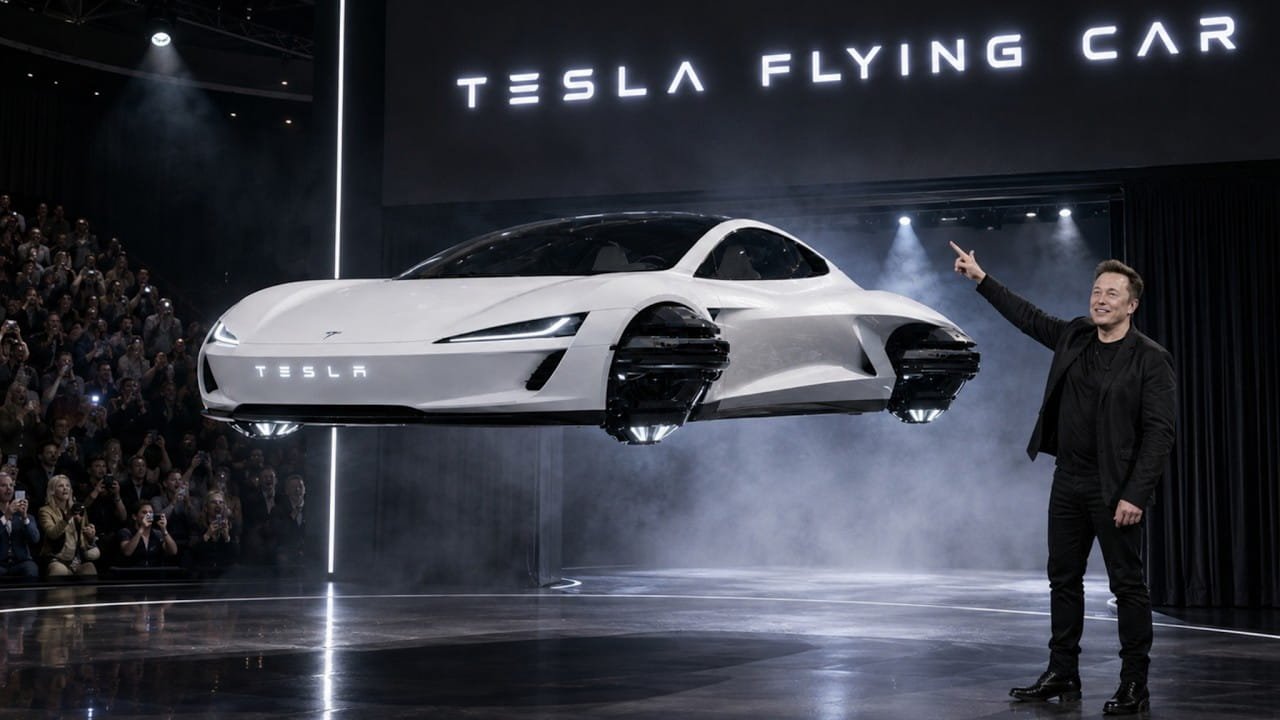
tesla roadster flying cars Interior: What Could the Cabin Look Like?
What’s expected: Tesla’s recent cars point toward a minimalist dashboard dominated by a large central touchscreen, with few physical buttons. A driver-focused cockpit, premium seating, and a navigation-heavy interface would fit the brand. Visibility and passenger comfort would matter, especially in a 2+2 layout. tesla roadster flying cars
What’s speculative: A genuine flying version would be a different cabin. It would need aviation-style controls, flight displays, redundant systems, restraint harnesses, and emergency equipment such as a ballistic parachute. These are our concept-level assumptions about what any flying vehicle would require, not announced Tesla features. 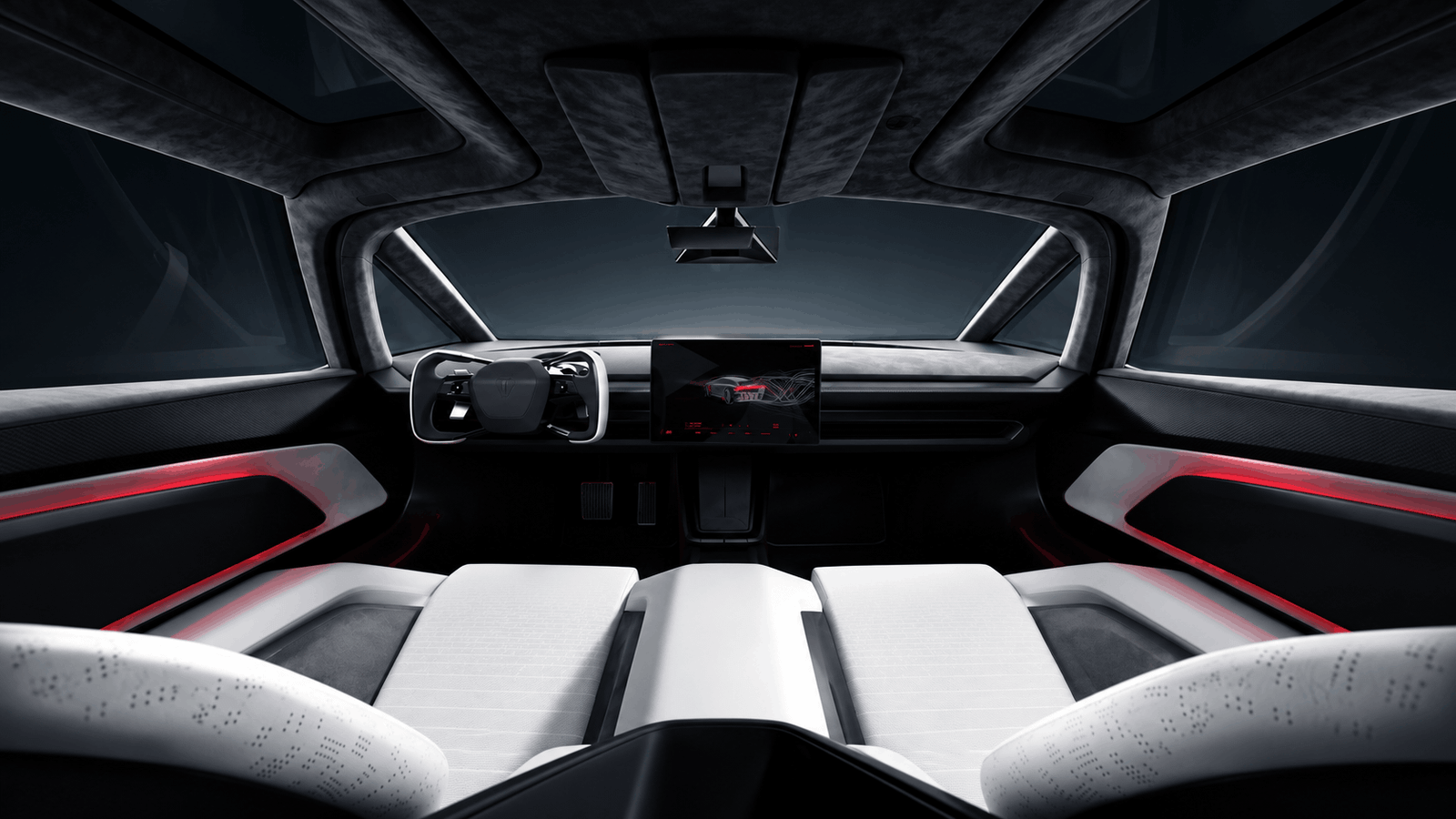
Performance, Acceleration, and Rocket Technology of tesla roadster flying cars
At the 2017 reveal, Tesla made headline claims of 0–60 mph in about 1.9 seconds, a top speed above 250 mph, and a range near 620 miles. Those are company targets, not independently verified results [verify whether they have been updated].
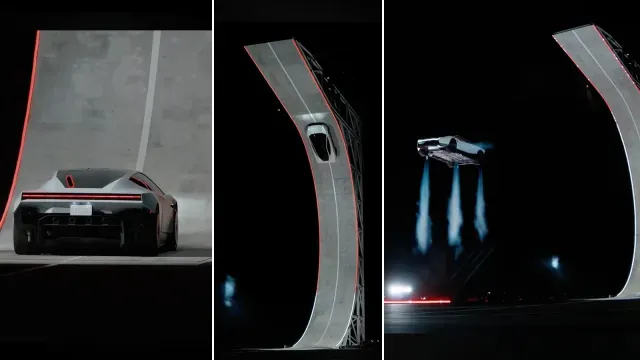
Musk later said a SpaceX package could add roughly ten thrusters. Electric motors deliver torque through the tires, so traction limits acceleration. Rocket thrusters push on the air itself, which could bypass some traction limits.
The engineering challenges are significant:
- Stability: Thrust applied off-center can upset a car at speed.
- Heat: Exhaust and hardware need thermal protection.
- Braking and thrust control: Force must be precise and repeatable.
- Energy use: Compressed-gas systems drain quickly.
- Safety: Passengers and bystanders must be protected.
No verified acceleration time, flight range, or hover capability exists for a rocket-assisted Roadster.
Elon Musk’s Vision for a Flying Tesla
Musk has repeatedly framed the Roadster as a halo product meant to exceed conventional expectations. His SpaceX-package remarks suggested borrowing aerospace thinking for a road car, and he has joked about the car hovering.
Context matters. These were aspirational and often playful comments, not a production commitment. He hasn’t confirmed a certified flying car, and no reliable source shows Tesla has built one. The Roadster’s unveiling and demo dates have also slipped more than once, so treat any timeline skeptically [verify the latest demo status].
If the thruster concept does arrive, it could influence ideas about traction, braking, and aerodynamics in other performance vehicles. That is our analysis, not a Musk statement.
Expected Price, Reservation Status, and Availability in the US
In 2017, Tesla listed a base price of $200,000 and a limited Founders Series at $250,000. Reservations were taken at $50,000 for the base car, while Founders Series buyers paid in full. Deliveries originally targeted 2020 and have not happened as of my information [verify].
Final pricing, specifications, and delivery dates must be confirmed with Tesla before anyone relies on them. A flying-capable or rocket-assisted version has no confirmed price, reservation process, or availability. Anyone offering reservations for a “flying Tesla” should be treated with caution.
Could Tesla Build a Real Flying Car in the Future?
Technically, a true flying car is a hard engineering problem. It would need:
- Lift and propulsion: Vertical flight demands enormous power.
- Battery energy density: Today’s batteries limit flight duration and payload.
- Air traffic management: Low-altitude traffic would need new systems.
- FAA certification: Aircraft must meet strict airworthiness and pilot-licensing rules, which are far more demanding than vehicle standards.
- Noise, affordability, and acceptance: Communities must tolerate it, and buyers must afford it.
A rocket-assisted sports car is not automatically a practical flying car. Short bursts of thrust are a stunt, while sustained, safe, repeatable flight is a different discipline entirely. tesla roadster flying cars
Tesla Roadster Flying Car vs. Traditional Electric Supercars
| Factor | Traditional electric supercar | Flying-car concept |
| Road usability | Proven, street-legal | Unproven |
| Engineering complexity | High but understood | Extreme |
| Safety | Crash-tested standards | Aviation-level redundancy needed |
| Cost | Expensive but known | Likely far higher |
| Regulation | NHTSA and state rules | NHTSA plus FAA |
Conventional electric supercars offer real, verifiable performance today. The flying concept offers imagination, but with far greater complexity.
Final Verdict: Dream Car or Future Possibility?
The Tesla Roadster remains an exciting performance-car project, and Musk’s rocket-package idea shows how far Tesla wants to push the category. A true Tesla Roadster flying car, however, remains speculative unless Tesla officially confirms it with specifications, safety evidence, and regulatory progress.
Until then, enjoy the dream, but trust the facts.
FAQ
1. Is Tesla officially making a flying Roadster?
No. Tesla has not announced a production flying Roadster. The flying idea comes from Musk’s comments and fan concepts.
2. What has Elon Musk said about the next-generation Roadster?
He has described a SpaceX package with thrusters for added performance and has joked about hovering. Check his latest posts for current claims.
3. How much could a flying Tesla Roadster cost?
There is no confirmed price. The 2017 base Roadster was listed at $200,000, but a flying-capable version has no official pricing.
About The Author