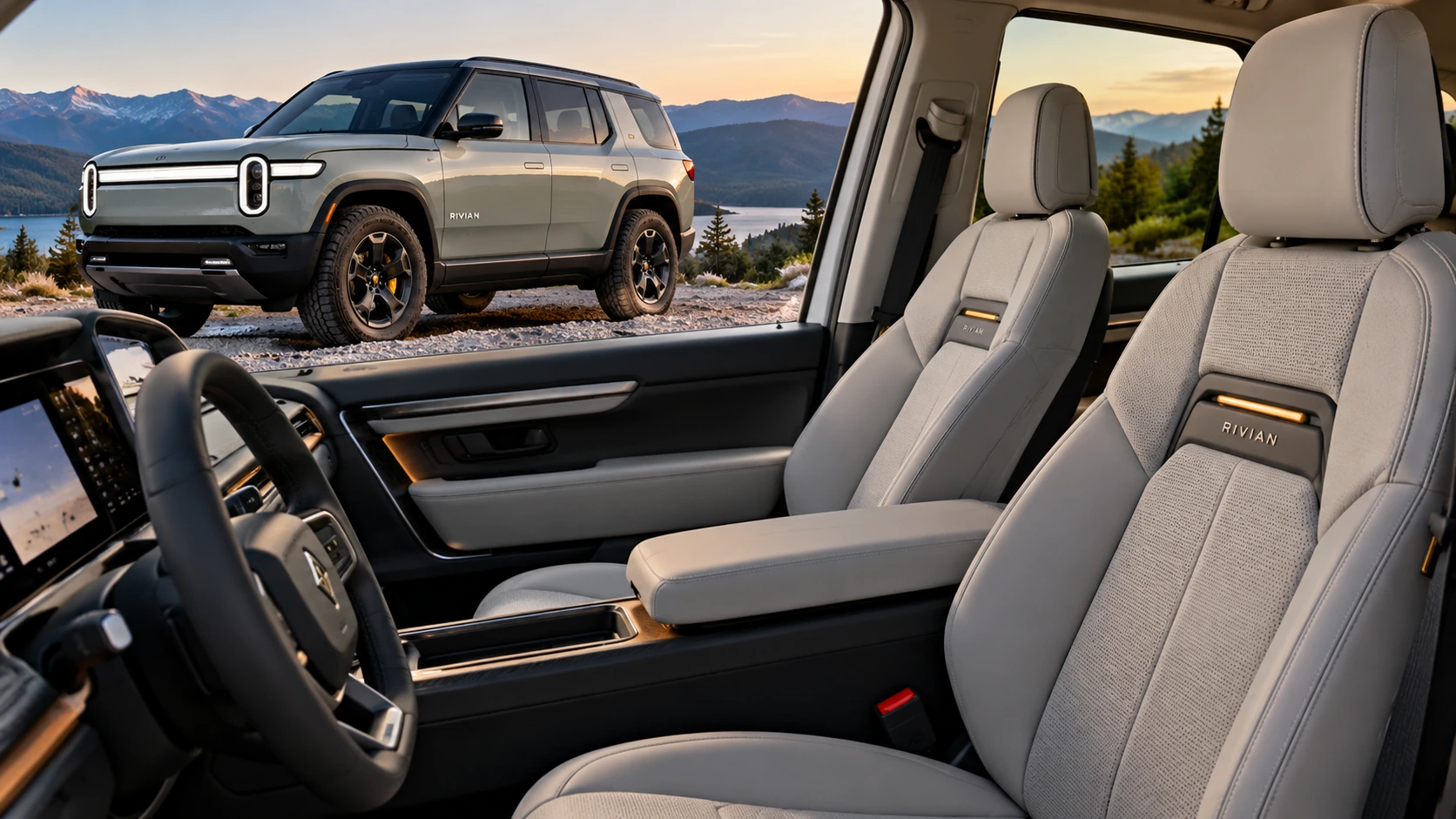
Rivian’s new R2 electric SUV is attracting attention in the United States for its combination of performance, technology, and a more accessible starting price. However, a recent change to its ventilated front seats has sparked debate among owners and prospective buyers.
The electric vehicle maker has confirmed that it revised the front-seat ventilation system after the airflow through the seatbacks generated excessive cabin noise. Newer vehicles now direct ventilation through the seat cushions rather than through both the cushions and seatbacks.
The change does not eliminate ventilated seats entirely, and Rivian says the seat-heating function remains unchanged. Still, the decision has raised questions about feature changes during production and whether customers should verify their vehicle’s equipment before taking delivery.
Here’s what changed in the Rivian R2, why the company made the decision, and what US buyers should know.
What Changed in the Rivian R2’s Ventilated Seats?
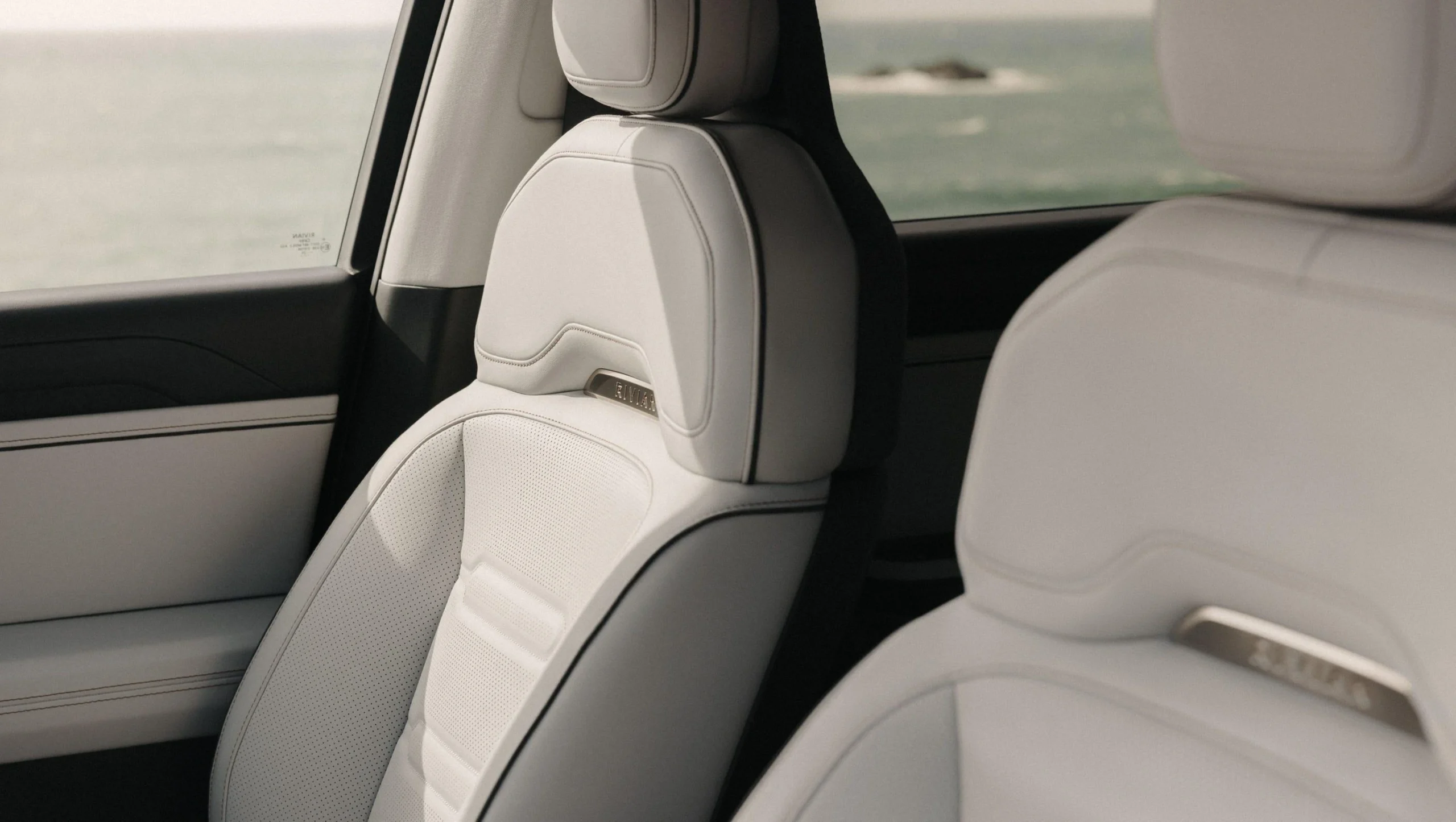
The Rivian R2 originally used a ventilation system with separate fans for the seat cushion and seatback. This design allowed airflow through both areas of the front seats.
According to reporting by Car and Driver and RivianTrackr, Rivian revised the system in newer production vehicles. The updated seats use a fan to direct air through the seat cushion, while the seatback ventilation has been removed.
The change has been reported in vehicles around VIN 10,000 and later, although buyers should confirm the exact equipment in their individual vehicles with Rivian. The VIN reference is a reported production cutoff, not a guarantee that every vehicle on either side has identical equipment.
Importantly, the front seats still have ventilation. The difference is that occupants no longer receive active airflow through the seatbacks in the updated configuration.
Rivian has also confirmed that the seat-heating function is unchanged. In other words, the revision affects cooling airflow rather than removing both heating and ventilation. (Sources: Car and Driver, RivianTrackr, October 2026.)
Why Did Rivian Remove Seatback Ventilation?
Rivian’s explanation centers on cabin noise.
The company said the seatback ventilation generated excessive noise, prompting it to simplify the system. Rivian also explained that its ventilated seats are designed to move air through the seat cushion, where occupants retain much of their body heat.
This suggests the company prioritized reducing unwanted noise while maintaining airflow through the seat area it considers most important for cooling.
Ventilated seats are useful in warm weather because they help circulate air around the occupant. However, the effectiveness of a ventilation system depends on several factors, including airflow volume, seat materials, cabin temperature, and the areas through which air is delivered.
Removing seatback airflow could make the cooling experience feel different for some drivers, particularly those who are accustomed to feeling ventilation around their lower backs.
Rivian has not published a quantified comparison of the old and revised systems showing the difference in cooling performance or cabin noise. Buyers should therefore avoid assuming that the updated system is either equally effective or substantially worse without independent testing.
How Are Rivian R2 Owners Reacting?
The change has prompted discussion on owner forums and social media. Some prospective buyers have expressed disappointment because they expected ventilation through both the seat cushions and seatbacks.
Reports have also described some customers considering delivery delays or cancellations following the discovery.
The concern is not limited to the physical feature itself. It also involves expectations: buyers may configure a vehicle, place an order, or prepare for delivery based on information they have already seen.
When a feature changes during production, clear communication becomes important. Customers need to understand whether their specific vehicle includes the original or revised equipment before making a final decision.
However, online comments should not be treated as representative of every Rivian customer. There is no verified, comprehensive figure showing how many buyers have cancelled orders specifically because of the seat change.
For prospective owners, the practical step is to ask Rivian to confirm the equipment fitted to the vehicle assigned to their order.
Does the Rivian R2 Still Have Heated and Ventilated Seats?
Yes, according to Rivian’s published specifications for the higher-level R2 trims.
The company lists heated and ventilated front seats as part of the R2 Premium’s equipment. The performance version also includes heated and ventilated seats, along with other premium interior features.
The important distinction is that ventilation may now operate through the seat cushion only in newer vehicles, rather than through both the cushion and backrest.
Buyers comparing vehicles should check the exact model year, trim, build configuration, and production details. Equipment can differ across versions, and an online feature list may not fully explain a production change.
If seatback ventilation is important to you, request written confirmation from the retailer or Rivian representative before accepting delivery.
Rivian R2 Price, Range, and Performance
The seat change is only one part of the wider R2 story. The electric SUV is designed to bring Rivian’s technology and adventure-focused approach to a broader group of buyers.
According to Rivian’s official R2 website, the lineup includes three main versions, with different power outputs, ranges, and starting prices.
| Rivian R2 version | Starting price | Estimated range | Listed power |
| R2 Standard | $44,990 | 275 miles | 350 hp |
| R2 Premium | $53,990 | 330 miles | 450 hp |
| R2 Performance | $57,990 | 330 miles | 656 hp |
Prices are US starting MSRPs before applicable taxes, fees, and options. Availability varies by trim and timing. Rivian lists the Standard version for spring 2027 and the Premium version for late 2026, while the Performance version is listed as available now. Confirm current ordering details directly with Rivian.
The Performance model is the most powerful of the three listed versions. Rivian estimates a 0–60 mph time of 3.6 seconds and a range of 330 miles.
The Standard version targets buyers looking for a lower entry price, while the Premium adds equipment such as a premium interior, upgraded audio, and heated and ventilated front seats.
These specifications help explain why the R2 has attracted attention in the electric SUV market. The seat-ventilation revision is a narrower issue involving cabin comfort and equipment expectations rather than a change to the vehicle’s overall powertrain strategy.
Rivian R2 vs. Tesla Model Y: Why Comfort Features Matter
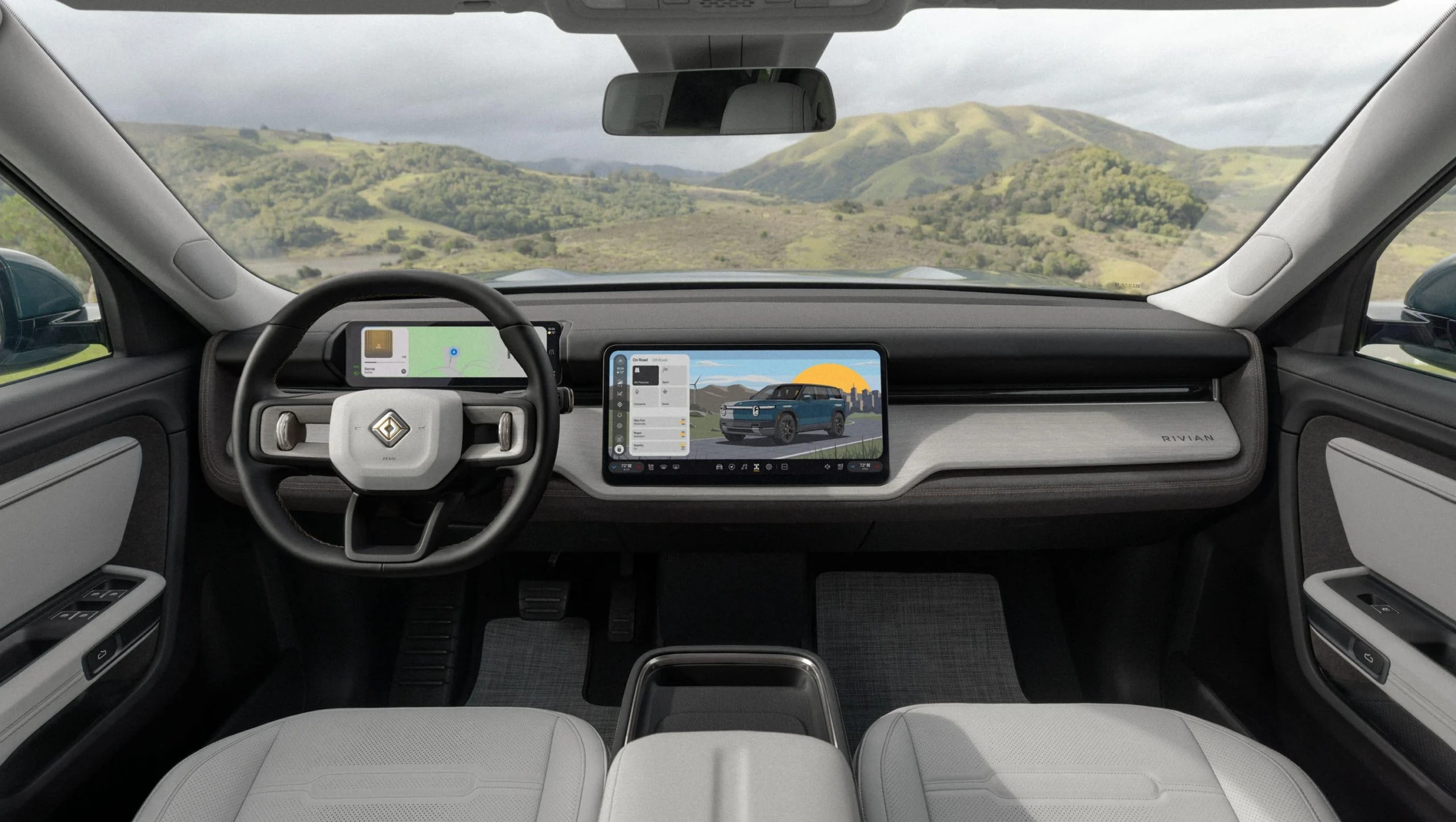
The Rivian R2 is positioned to compete with established electric SUVs, including the Tesla Model Y.
For buyers comparing these vehicles, range, acceleration, charging access, passenger space, software, and price are likely to be major considerations. Comfort features can also influence the decision, particularly for people who drive in hot climates or spend long periods behind the wheel.
Ventilated seats are not essential for every customer, but they can improve comfort in warm conditions. Some buyers may care more about seat cooling than others, while others may prioritize quieter operation.
That makes the revised R2 ventilation system a useful reminder to compare actual equipment rather than relying only on a vehicle’s headline specifications.
Prospective customers should compare the exact trims they can order, check the features included as standard, and verify any differences between demonstration vehicles and the vehicle they will receive.
What Should Buyers Check Before Taking Delivery?
If you’re considering a Rivian R2, there are several practical steps worth taking before delivery.
- Confirm the seat configuration. Ask whether your specific vehicle has ventilation through both the seat cushion and seatback or through the cushion only.
- Check the vehicle identification number. Use the VIN assigned to your vehicle when discussing production details with Rivian. Do not rely solely on a broad online cutoff.
- Test the ventilation system. If possible, operate the seats during a test drive and assess airflow, noise, and comfort.
- Review the vehicle’s equipment list. Check the final configuration and any documentation supplied with the vehicle.
- Ask about available options or changes. If the revised ventilation system is a deal-breaker, clarify your options with Rivian before accepting delivery. Do not assume a retrofit is available unless the company confirms it.
These steps can help prevent surprises and make it easier to compare the R2 with other electric SUVs.
Will Rivian Restore Seatback Ventilation?
As of the latest reporting available for this article, Rivian has explained why it revised the system, but it has not announced a confirmed plan to restore seatback ventilation to newer production vehicles.
The company could make further changes in response to customer feedback, but any future revision remains unconfirmed.
For now, buyers should base their decisions on the equipment listed for their specific vehicle rather than assuming the original system will return.
The most useful updates to watch are official Rivian statements, changes to the R2 configuration page, and direct confirmation from the company about the equipment included in future production vehicles.
Frequently Asked Questions
Did Rivian remove ventilated seats from the R2?
No. Rivian has revised the system in newer vehicles so that airflow passes through the seat cushion rather than through both the cushion and seatback.
Why did Rivian change the ventilation system?
Rivian said the seatback ventilation generated excessive cabin noise, so it simplified the system.
Are Rivian R2 heated seats affected?
Rivian says the seat-heating function remains unchanged.
Which Rivian R2 vehicles have the revised seats?
Reports place the change around VIN 10,000 and later. Buyers should confirm the exact equipment with Rivian because the reported cutoff should not be treated as a universal guarantee.
How much does the Rivian R2 cost?
Rivian’s published starting prices are $44,990 for the Standard, $53,990 for the Premium, and $57,990 for the Performance version, before applicable taxes, fees, and options. Availability varies by trim.
Should buyers cancel their Rivian R2 orders because of this change?
That depends on individual priorities. Buyers who value seatback ventilation should verify their vehicle’s equipment and discuss available options with Rivian before deciding.
Final Thoughts
Rivian’s decision to revise the R2’s ventilated seats highlights a small but important aspect of buying a new vehicle: equipment can change as production develops.
The company says the revision was intended to address excessive cabin noise while preserving airflow through the seat cushions and leaving seat heating unchanged. Nevertheless, some customers may prefer the original design, particularly if they value cooling around their backs during hot-weather driving.
The best approach for prospective R2 owners is to verify the precise configuration of their assigned vehicle before delivery. The R2’s pricing, range, and performance remain key reasons to consider it, but the details of everyday comfort features matter too.
As Rivian continues expanding production, clear communication about changes like this will be important in maintaining buyer confidence.
About The Author