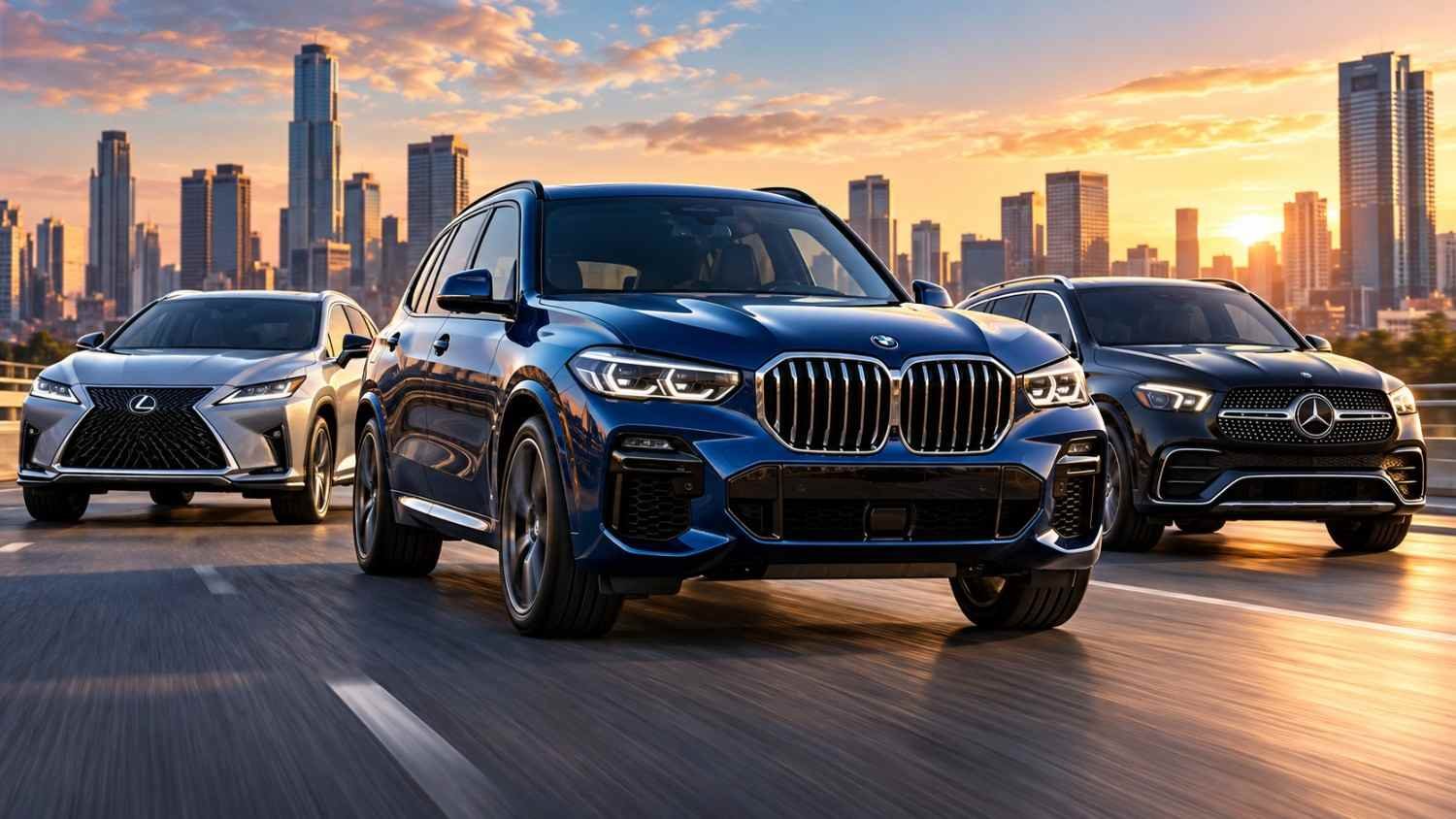
BMW leads the Q3 2026 U.S. luxury sales comparison as Lexus and Mercedes-Benz compete for buyers.
BMW has given its luxury rivals another reason to watch closely. The German carmaker sold more than 100,000 vehicles in the United States during the third quarter of 2026, and its sales are still growing. For a brand competing with Lexus and Mercedes-Benz, that is a strong result.
According to BMW of North America, the company sold 100,210 vehicles between July and September. That was 3.4% more than the 96,886 vehicles sold during the same period in 2025. BMW has now sold 287,154 vehicles in the U.S. during the first nine months of 2026, up 4.3% year over year. These figures make BMW U.S. Luxury Car Sales Q3 2026 an important topic for car fans and industry watchers.
But the story is not just about one strong quarter. BMW’s SUVs are helping drive sales, while its traditional cars and electric models are facing different challenges. Lexus also had a positive quarter, and Mercedes-Benz reported growth in its U.S. retail business.
So, what is helping BMW stay ahead, and can it hold its position through the end of 2026? Let’s look at the sales numbers, the models behind the results, and what buyers should watch next. If you follow luxury cars, keep reading for the key facts and a closer look at what they mean.
BMW Opens a Clear Lead After Q3
BMW’s latest U.S. sales report shows steady growth. The brand sold 100,210 vehicles in Q3 2026, compared with 96,886 in Q3 2025. That means it sold 3,324 more vehicles than it did a year earlier.
The bigger picture looks even stronger. BMW sold 287,154 vehicles from January through September, compared with 275,385 during the same period last year. This adds 11,769 vehicles to its year-to-date total.
Here are the main numbers behind BMW U.S. Luxury Car Sales Q3 2026:
| Sales measure | Q3 2026 | Q3 2025 | Change |
| Total BMW sales | 100,210 | 96,886 | +3.4% |
| Passenger cars | 43,622 | 42,035 | +3.8% |
| Light trucks and SUVs | 56,588 | 54,851 | +3.2% |
| January–September sales | 287,154 | 275,385 | +4.3% |
The figures show that BMW is not relying on one type of vehicle alone. Both passenger cars and light trucks grew during the quarter. However, light trucks and SUVs made up the larger share of sales.
That matters because many U.S. buyers want vehicles with more space, a higher driving position, and room for family trips. BMW’s results suggest that its current mix of cars and SUVs is meeting demand.
The title may sound bold, but the numbers support a more careful point: BMW has built a strong lead in reported sales volume, although its rivals are still competing for luxury-car buyers.
SUV Demand Is Driving Much of the Growth
BMW’s SUVs are an important part of its U.S. business. In the third quarter, the company sold 56,588 light trucks, up 3.2% from the same period last year. These vehicles made up more than half of BMW’s total quarterly sales.
This is easy to understand when you look at how many people use their cars. Some buyers need space for children, shopping, pets, or long road trips. Others like the higher seating position and the feeling of control that comes with an SUV.
BMW’s X models give buyers several choices, from smaller daily drivers to larger family vehicles. The X3 and X5, in particular, have drawn attention in the brand’s U.S. sales mix. BMW-focused coverage of the quarter identified these two models as its leading sellers.
There is also a useful detail in the year-to-date figures. BMW sold 159,845 light trucks in the first nine months of 2026, compared with 147,520 during the same period in 2025. That is an 8.4% increase. Passenger-car sales, by contrast, slipped 0.4% over the same period.
For anyone following BMW U.S. Luxury Car Sales Q3 2026, this is one of the biggest takeaways: SUVs are doing more of the work in the company’s year-to-date growth.
Still, sales numbers alone cannot tell us why every customer chose a BMW. Price, dealer offers, model updates, fuel costs, and personal needs can all affect a purchase. The data shows a clear trend, but it does not prove one single cause.
How BMW Compares With Lexus and Mercedes
BMW is not the only luxury brand having a good quarter. Lexus and Mercedes-Benz also reported positive U.S. results, which makes the market more interesting than a simple winner-and-loser story.
Lexus sold 93,056 vehicles in Q3 2026, up 1.6% from a year earlier. BMW’s reported total was 7,154 vehicles higher. This gives BMW a clear quarterly advantage over Lexus based on the figures released by the two brands.
Mercedes-Benz USA reported 76,200 passenger-car sales in the quarter, up 4%. It also reported 9,600 van sales, bringing total U.S. retail sales to 85,800 vehicles, up 3%.
| Brand | Q3 2026 U.S. figure | Year-over-year change |
| BMW | 100,210 vehicles | +3.4% |
| Lexus | 93,056 vehicles | +1.6% |
| Mercedes-Benz USA | 85,800 total retail sales, including vans | +3% |
Sources: BMW of North America, Lexus USA, and Mercedes-Benz USA. Reporting categories differ, so these figures are not a perfect like-for-like comparison.
The comparison gives useful context for BMW U.S. Luxury Car Sales Q3 2026, but readers should understand the limits. BMW reports passenger cars and light trucks. Lexus reports its division’s vehicle sales, while the Mercedes-Benz USA total above includes vans. The totals do not represent exactly the same vehicle mix.
Even with that difference, BMW’s quarterly figure is higher than the two reported totals shown here. That puts the brand in a strong position as the year enters its final quarter.
Lexus still grew, and Mercedes-Benz also posted gains. Their results show that buyers have not stopped considering other luxury brands. BMW has the stronger reported volume in this comparison, but the competition remains active.
Electric Models Face a Mixed Quarter
Electric vehicles are another important part of BMW’s story, but the latest figures are not all positive. BMW reported that sales of plug-in hybrid vehicles rose 23.2% in Q3 2026 and were up 11.7% for the first nine months of the year.
However, total electrified vehicle sales, including battery-electric and plug-in hybrid models, fell 24.9% during the quarter. BMW linked the decline to current market conditions and a planned model changeover. The company also said deliveries of the new all-electric BMW iX3 and BMW i7 had begun contributing to battery-electric sales.
This mixed result matters because electric-car buyers are watching prices, driving range, charging access, and new model choices. A strong petrol or hybrid lineup can support overall sales while the electric range goes through changes.
BMW also used the quarter to talk about its future product plans. The company said the new eighth-generation 3 Series and fully electric i3 would begin reaching U.S. dealerships early in 2027. Both models point to a strategy that gives customers a choice of powertrain.
For BMW U.S. Luxury Car Sales Q3 2026, the lesson is simple: overall growth does not mean every part of the business is growing. BMW is selling more vehicles overall, but it still needs to make its electric lineup work for more buyers.
The coming months will show whether the new models can build interest and help support sales in 2027.
What Buyers Should Watch in Q4
BMW has a strong start to the final stretch of 2026, but there are still questions worth watching. A good quarter does not guarantee that the same pace will continue through December.
Here are five things that could matter next:
1. New Model Arrivals
Buyers may want to know when updated models reach local dealers, what features they offer, and how much they cost. New launches can attract attention, but their effect on sales takes time to measure.
2. SUV Prices and Offers
BMW’s light trucks have been a key source of growth. Discounts, finance offers, trade-in values, and inventory levels could affect what buyers pay and how quickly dealers move vehicles.
3. Electric-Car Choices
The iX3 and other electric models will be worth watching as availability changes. Buyers should compare range, charging needs, warranty coverage, and the full cost of ownership before making a decision.
4. Lexus and Mercedes-Benz Updates
Rival brands can respond with fresh models, new features, or attractive deals. A buyer comparing three luxury brands should check the exact trim, equipment, price, and delivery time rather than choosing by brand name alone.
5. Fourth-Quarter Sales Results
The final quarter will help show whether BMW can keep its year-to-date momentum. Monthly results can move up or down, so the full-year report will give a clearer view than one strong quarter.
The best advice for shoppers is to test-drive more than one model and ask dealers for written, itemized quotes. That makes it easier to compare real costs instead of focusing only on the monthly payment.
For industry readers, the next report will answer a different question: can BMW turn its current sales advantage into a full-year win? The figures released so far make that a reasonable possibility, but the year is not over yet.
Conclusion: BMW Has Momentum, but Q4 Still Matters
BMW’s Q3 results give the brand a lot to feel good about. It sold 100,210 vehicles during the quarter and reached 287,154 sales for the first nine months of 2026. Growth in SUVs and light trucks has helped lift its total, while passenger-car sales have held up better in the quarter than they have across the full year.
The BMW U.S. Luxury Car Sales Q3 2026 story also shows why it is worth looking beyond a single headline. Lexus grew by 1.6%, and Mercedes-Benz USA reported higher quarterly retail sales. BMW has the largest reported figure in the comparison above, but differences in reporting mean the totals should be read with care.
The next big test is Q4. New models, dealer offers, buyer demand, and changes in electric-car sales could all shape the final result. For now, BMW has built a strong position, but its rivals still have time to respond.
Frequently Asked Questions
1. How many vehicles did BMW sell in the U.S. in Q3 2026?
BMW sold 100,210 vehicles in the United States between July and September 2026. That was a 3.4% increase compared with the same quarter in 2025.
2. What were BMW’s U.S. sales for the first nine months of 2026?
BMW sold 287,154 vehicles from January through September 2026. Its year-to-date sales were up 4.3% compared with the same period in 2025.
3. Is BMW ahead of Lexus in Q3 2026 U.S. sales?
BMW reported 100,210 vehicles, while Lexus reported 93,056. BMW’s figure was higher, although each company’s sales reporting should be checked before making a strict comparison.
4. How did Mercedes-Benz perform in the United States in Q3 2026?
Mercedes-Benz USA reported 85,800 total retail sales, including 76,200 passenger cars and 9,600 vans. Its total retail sales rose 3% year over year.
5. Which BMW vehicle type drove the most sales?
BMW’s light trucks, which include its SUV models, accounted for 56,588 sales in Q3. Passenger cars accounted for 43,622, making light trucks the larger group.
6. Did BMW’s electric vehicle sales increase in Q3 2026?
Not across all electrified vehicles. BMW reported a 24.9% quarterly decline in combined electric and plug-in hybrid sales, while plug-in hybrid sales alone increased 23.2%.
7. Which new BMW models should buyers watch in 2027?
BMW said the new eighth-generation 3 Series and fully electric BMW i3 would begin arriving at U.S. dealerships early in 2027. Availability may vary by location.
8. Will BMW keep its U.S. luxury sales lead in 2026?
BMW’s sales through September put it in a strong position, but the final result depends on Q4 demand, vehicle supply, rival sales, and how each brand reports its totals.
About The Author