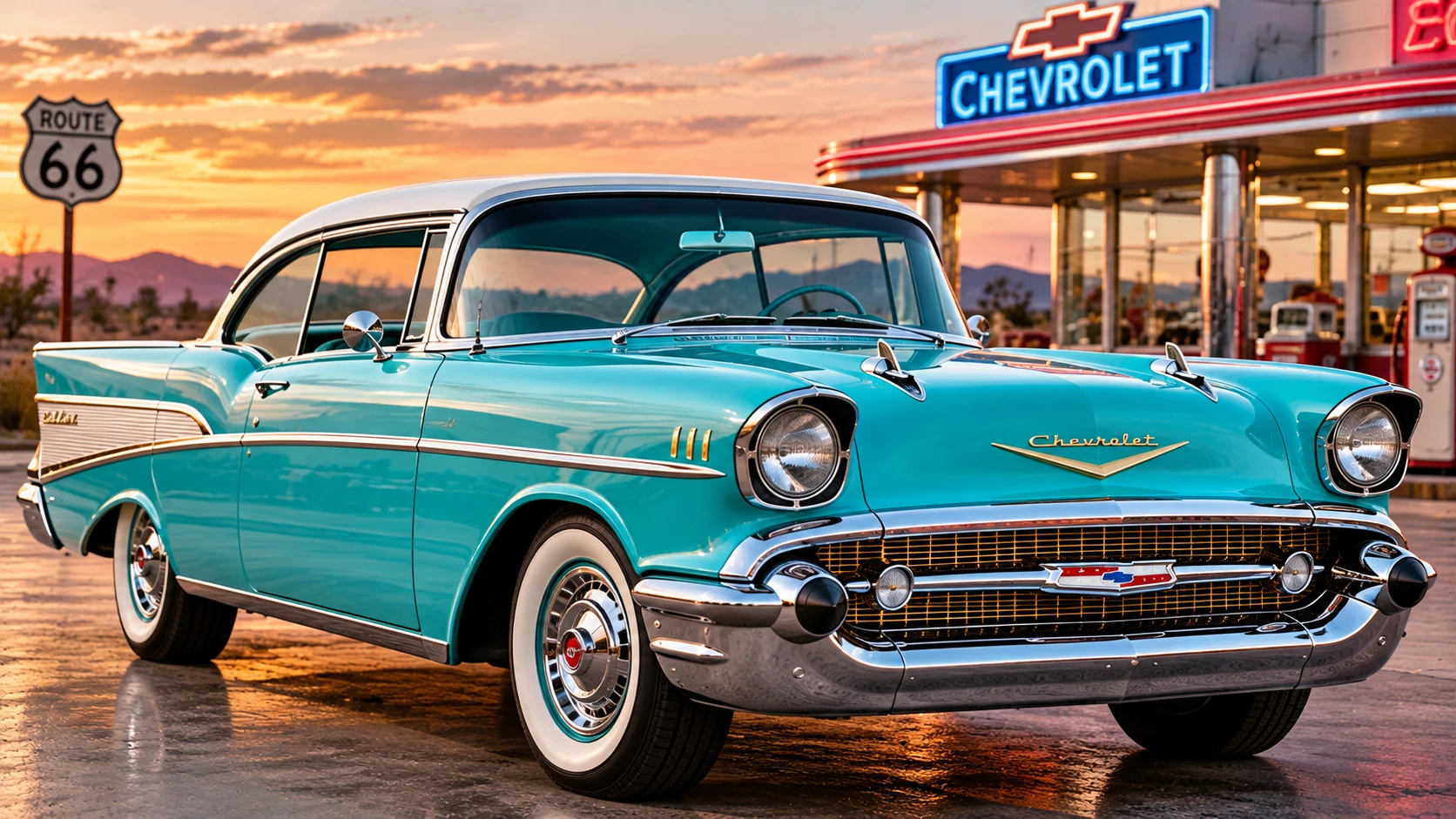
The 1957 Chevrolet remains one of the most recognizable classic cars in American automotive history. With its dramatic tailfins, bright chrome details, two-tone paint options, and unmistakable 1950s styling, the Chevrolet Bel Air became a symbol of an era when American cars were designed to stand out.
Nearly seven decades later, the 1957 Chevy continues to attract classic-car collectors, restoration enthusiasts, and fans of vintage American automobiles. Some examples remain close to their original factory condition, while others have been transformed into modern restomods with upgraded engines, suspension, and brakes.
But what made the 1957 Chevrolet so special? How powerful were its original V8 engines, and how much is a Bel Air worth in 2026?
Here’s a closer look at the car’s history, specifications, iconic design, and current collector-market appeal.
Why the 1957 Chevrolet Became an American Classic
The 1957 Chevrolet arrived during a period when American automakers competed through distinctive styling, increasingly powerful engines, and bold exterior designs.
Chevrolet’s Bel Air stood out with its sweeping rear fins, wide front grille, chrome trim, and eye-catching color combinations. These features made the car instantly recognizable, even among the many large American sedans and coupes of the 1950s.
The Bel Air was also available in several body styles, including two-door hardtops, sedans, and convertibles. Chevrolet’s 1957 lineup offered buyers different combinations of practicality, style, and performance.
Today, the car’s popularity comes from more than its appearance. It represents an important period in American automotive design, when large bodies, bright chrome, and V8 power helped define the nation’s car culture.
General Motors continues to feature the 1957 Bel Air Convertible in its official heritage collection, describing these cars as desirable and collectible postwar vehicles.
1957 Chevrolet Models and Body Styles
The Bel Air is often the first model people associate with the 1957 Chevrolet, but it was not the only Chevrolet passenger-car series available that year.
Chevrolet’s lineup included the One-Fifty, Two-Ten and Bel Air series, with different equipment levels and body styles.
Chevrolet Bel Air
The Bel Air was the more upscale series, known for its decorative trim, distinctive styling and range of available options. Depending on configuration, buyers could choose a sedan, sport coupe, convertible or Nomad station wagon.
The convertible is particularly recognizable because of its open roof, sweeping body lines and extensive chrome detailing.
Chevrolet Two-Ten
The Two-Ten offered a more restrained alternative to the Bel Air. It shared much of the same basic engineering but generally had less exterior decoration.
Chevrolet One-Fifty
The One-Fifty occupied the more basic end of Chevrolet’s passenger-car lineup. It emphasized simplicity and practicality rather than the Bel Air’s more elaborate appearance.
For collectors, the exact model matters. A Bel Air convertible, a two-door hardtop, and a four-door sedan can have significantly different market values, even when they share similar mechanical components.
1957 Chevrolet Engine Options and Horsepower
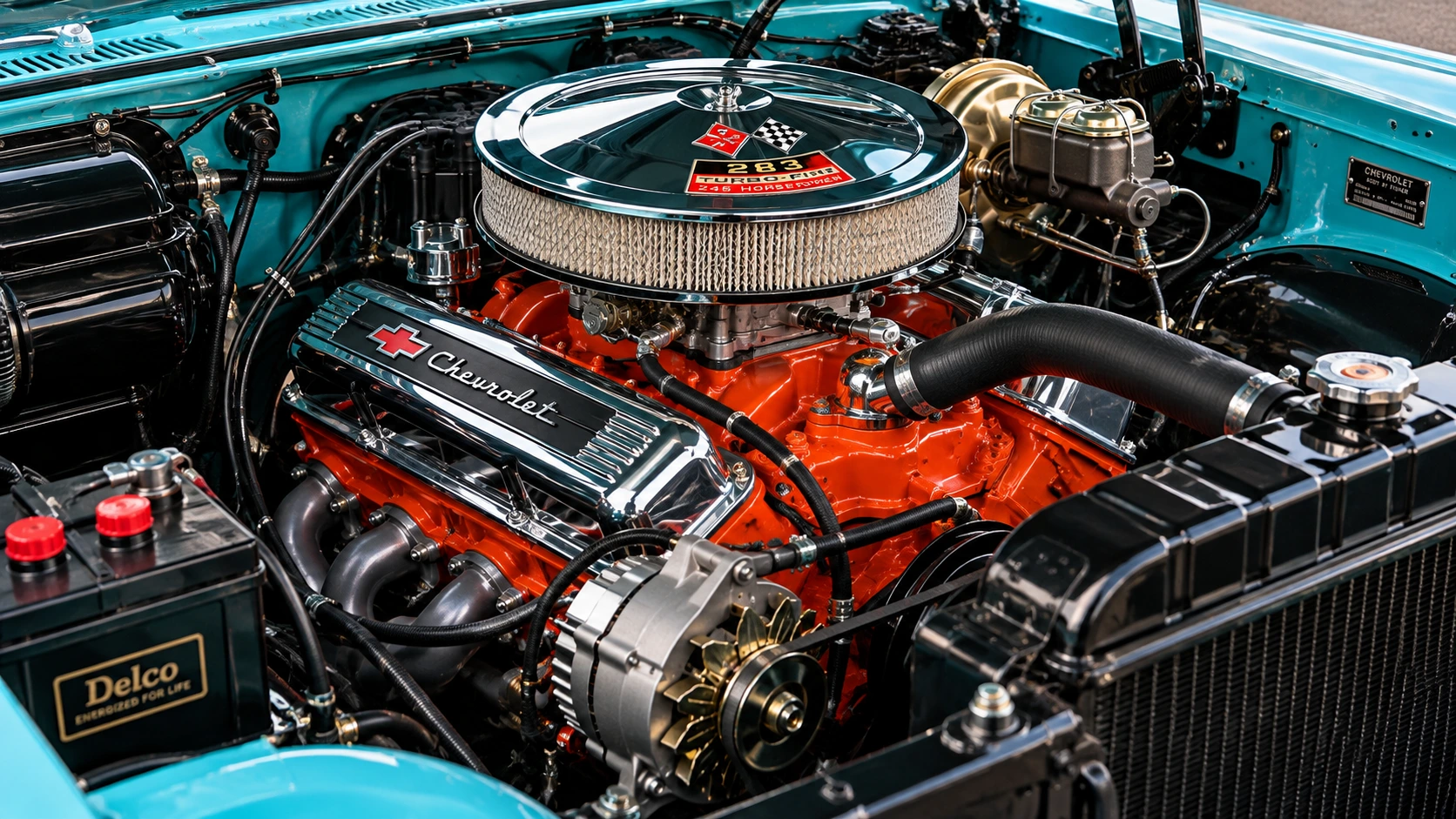
One of the biggest reasons the 1957 Chevrolet remains popular is its engine lineup, particularly the small-block V8.
Chevrolet offered both six-cylinder and V8 engines, giving buyers a choice between everyday transportation and stronger performance.
The 235-cubic-inch six-cylinder
The 235-cubic-inch inline-six was one of the available engines. It offered a more traditional approach to everyday driving and remains relevant to collectors seeking a car with period-correct mechanical specifications.
The 265-cubic-inch V8
The 265-cubic-inch V8 was part of Chevrolet’s early small-block family. It helped establish the compact V8 architecture that would become an important part of Chevrolet’s performance history.
The 283-cubic-inch small-block V8
The 283-cubic-inch V8 was a major highlight of the 1957 model year. Chevrolet developed this engine from its earlier small-block design, with some versions reaching the milestone of one horsepower per cubic inch.
Depending on the configuration, the 283 was available with different carburetion and fuel-injection systems.
For example, General Motors documents a 1957 Bel Air Convertible equipped with a 283-cubic-inch V8 producing 245 horsepower. Chevrolet also offered higher-performance 283 configurations, including a fuel-injected version rated at 283 horsepower.
These figures apply to specific engine configurations rather than every 1957 Chevrolet. Buyers researching a classic car should verify the original engine, factory specifications, and any later modifications.
Source: Chevrolet Small-Block Engine History.
Design and Interior: What Made the 1957 Chevy Stand Out?
The 1957 Chevrolet’s exterior is a major part of its lasting appeal.
Its rear fins, chrome accents, wide grille, and carefully shaped body panels captured the optimism and visual character of 1950s American car design.
Two-tone paint schemes were especially striking. Combinations of white with turquoise, red, black, or other period colors helped emphasize the car’s body lines.
The interior was similarly characteristic of the era. A wide dashboard, bench seating, and large steering wheel gave the cabin a different atmosphere from today’s driver-focused interiors.
Available equipment varied by model and factory options. Some cars were fitted with features such as power steering, power brakes, automatic transmission, and air conditioning.
Modern expectations should be kept in mind, however. A classic 1957 Chevrolet does not offer the standard safety technology, infotainment, or driver assistance systems found in contemporary vehicles.
Its appeal is rooted in period design, driving character, and historical significance rather than modern convenience.
How Much Is a 1957 Chevrolet Worth in 2026?
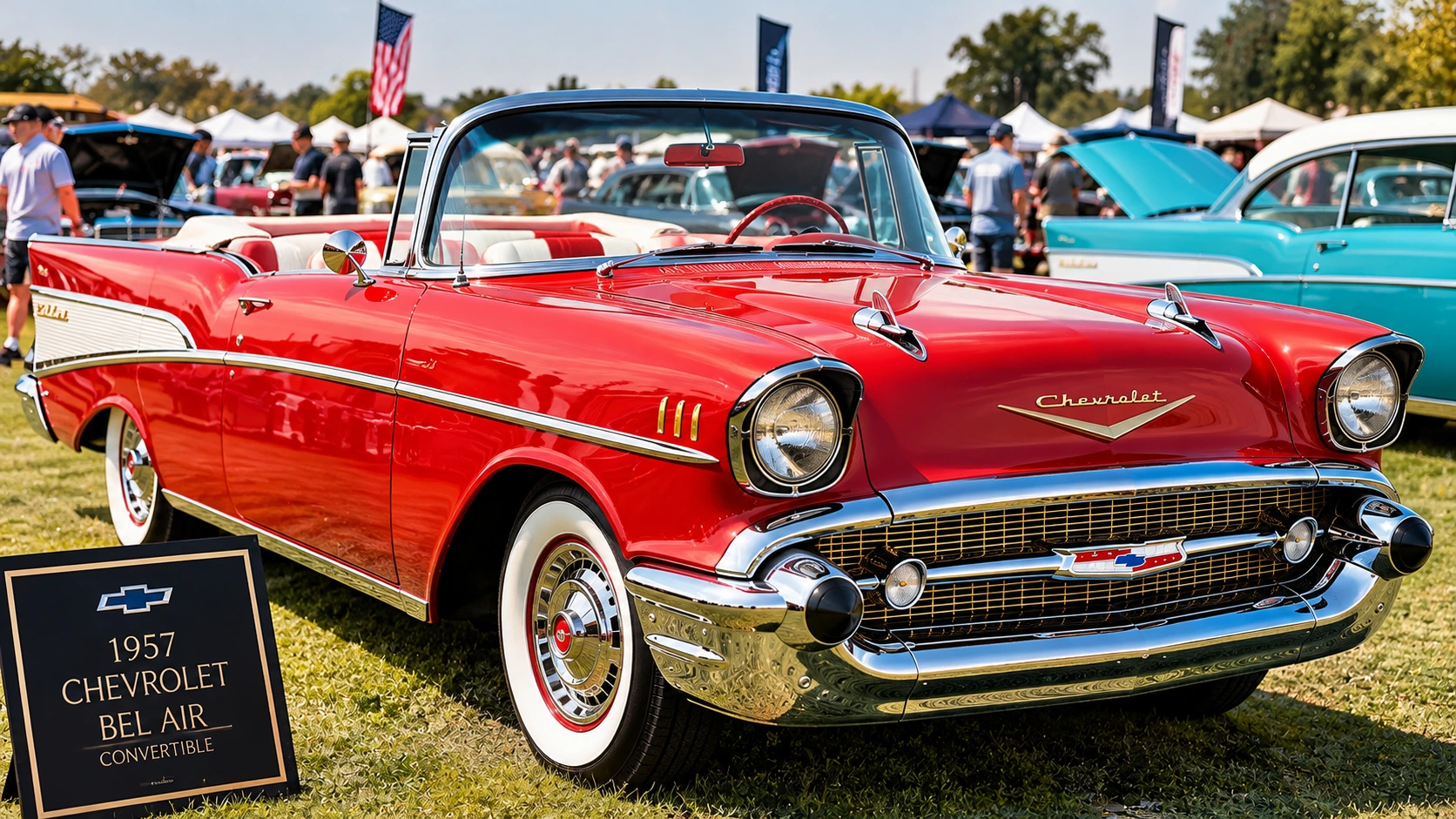
The value of a 1957 Chevrolet depends heavily on its body style, condition, originality, engine configuration, and restoration quality.
A project car requiring extensive work can sell for far less than a fully restored convertible. Cars with documented histories, desirable factory options, and matching original components can command a premium.
Recent auction records illustrate this wide range. Hagerty Marketplace reported a 1957 Bel Air two-door hardtop selling for $21,668 in October 2025, while a 1957 Bel Air Sport Coupe with a four-speed transmission sold for $36,380 in August 2025. Other highly restored or specially configured examples have achieved substantially higher prices.
Indicative collector-market ranges
The following are broad planning estimates, not guaranteed valuations or live asking prices.
| Condition or type | Indicative price range |
| Project car needing major work | 8,000–20,000 |
| Driver-quality example | 20,000–40,000 |
| Well-restored hardtop or sedan | 35,000–65,000 |
| Desirable convertible or highly original example | 60,000–110,000+ |
| Exceptional, rare or concours-quality car | Can exceed $110,000 |
Actual prices can fall outside these ranges. Modified vehicles and restomods also need to be assessed separately because their value depends on build quality, parts, documentation, and buyer demand.
Before purchasing a 1957 Chevrolet, compare recent completed sales for the same body style and similar condition rather than relying only on advertised prices.
Original Restoration vs. Modern Restomod
Collectors generally encounter two broad approaches to restoring a 1957 Chevrolet.
Original-style restoration
An original-style restoration aims to preserve or recreate the vehicle’s factory appearance and specifications. This can include the correct engine, paint colors, trim, interior materials, and other original components.
For collectors who value historical accuracy, originality and documentation can make a meaningful difference.
Modern restomod
A restomod combines classic styling with modern mechanical upgrades. A builder might install a more powerful engine, a modern transmission, upgraded brakes, improved suspension, air conditioning, or contemporary wheels.
Restomods can be easier to use regularly than some original cars, but they appeal to a different set of buyers. Extensive modifications do not automatically increase value; the quality and execution of the build matter.
Neither approach is universally better. The right choice depends on whether the owner prioritizes originality, usability, performance, or a combination of those goals.
What to Check Before Buying a 1957 Chevrolet
Buying a nearly 70-year-old car requires more than checking its paint and engine sound.
Before committing to a purchase, consider these points:
- Rust and body condition: Inspect the floors, trunk, lower body panels, and other areas vulnerable to corrosion.
- Frame condition: Look for structural damage, poor repairs, and signs of previous accidents.
- Engine and transmission: Confirm whether the powertrain is original, period-correct, or replaced.
- VIN and documentation: Check identification numbers, ownership records, and available restoration receipts.
- Electrical and mechanical systems: Test the brakes, steering, cooling system, lights, and charging system.
- Restoration quality: Inspect paintwork, panel alignment, chrome, interior fit, and the quality of modifications.
For an expensive purchase, an independent classic-car inspection can help identify problems that are not obvious during a short test drive.
Why Collectors Still Love the 1957 Chevrolet
The 1957 Chevrolet combines several qualities that continue to appeal to American classic-car enthusiasts.
First, its styling is instantly recognizable. The tailfins, chrome, and two-tone paint give it a distinctive appearance that modern vehicles rarely replicate.
Second, the car offers a connection to an important era in automotive history. The small-block V8 helped shape Chevrolet’s later performance identity, while the Bel Air became an enduring symbol of postwar American car culture.
Finally, the model offers different experiences for different owners. Some want a factory-correct collectible, others prefer a weekend cruiser, and some want a customized restomod.
That variety helps explain why the 1957 Chevrolet continues to appear at classic-car auctions, restoration shops, and enthusiast gatherings.
Is Chevrolet Bringing Back the 1957 Bel Air in 2026?
There is no confirmed announcement that Chevrolet is bringing back the 1957 Bel Air as a new 2026 production model.
The classic car’s continued popularity, modern restomod builds, and online attention should not be confused with an official new-car launch.
For now, the 1957 Chevrolet Bel Air remains a classic collector vehicle. Anyone seeing claims about a new 2026 Bel Air should look for confirmation from Chevrolet or General Motors before treating them as news.
Frequently Asked Questions
How much did a 1957 Chevrolet cost when new?
General Motors lists a base price of $2,611 for the specific 1957 Bel Air Convertible in its heritage collection. Original prices varied by model, body style, and optional equipment.
How much horsepower did the 1957 Chevrolet Bel Air have?
Horsepower depended on the engine. Available choices included six-cylinder engines and several V8 configurations. A documented 283-cubic-inch V8 produced 245 horsepower, while a special fuel-injected version was rated at 283 horsepower.
What is the most desirable 1957 Chevrolet?
The Bel Air convertible and certain highly equipped or rare configurations are especially sought after. However, desirability and value depend on originality, condition, documentation, and the preferences of individual collectors.
Is the 1957 Chevrolet Bel Air a good collector car?
It can be appealing to collectors who appreciate classic American styling and vintage V8 engineering. Potential buyers should still consider restoration costs, mechanical condition, originality, and insurance requirements.
Is the 1957 Chevrolet coming back in 2026?
No confirmed production revival has been announced. The original Bel Air remains a historic vehicle rather than a confirmed 2026 model.
Final Thoughts
The 1957 Chevrolet remains an enduring symbol of American automotive design. Its dramatic styling, chrome details, two-tone finishes, and available small-block V8 engines helped make the Bel Air one of the best-known cars of its era.
In 2026, collector values continue to depend on the individual car rather than the model year alone. A project car, a well-kept driver, and a rare convertible can occupy very different price brackets.
For anyone considering a purchase, careful inspection and comparison with recent sales are essential. For enthusiasts, the 1957 Chevy’s lasting appeal is simpler: it represents a distinctive period of American car culture that still turns heads today.
About The Author